Many adults assume that straightening teeth is something you do as a teenager — and that if it did not happen then, it simply is not an option anymore. That is not true at all. More adults than ever are choosing orthodontic treatment, and Invisalign has become one of the most popular choices.
If you have been searching for Invisalign near you and wondering whether it is realistic for someone your age, this guide covers everything you need to know — costs, timeline, and what the experience actually feels like day to day.
Why Adults Are Choosing Invisalign
Adult orthodontics is one of the fastest-growing areas of dentistry. The reasons are easy to understand.
Many adults had braces as teenagers but never wore their retainers consistently. Teeth shift naturally over time—and that childhood straightening slowly undoes itself. Others simply never had the opportunity for orthodontic treatment when they were young.
So, whatever the underlying cause, orthodontic treatment as an adult is about much more than just appearance. Crooked and overcrowded teeth are difficult to clean efficiently, leading to a greater likelihood of decay and gum disease. It will also prevent abnormal wear on the tooth surface and minimize problems of the jaw later in life.
Invisalign, specifically, appeals to adults because it fits around a professional lifestyle in a way that traditional metal braces simply do not.
What Is Invisalign?
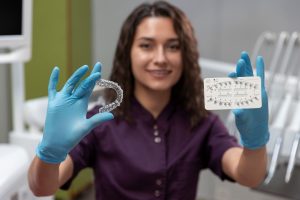
Invisalign is a modern orthodontic system that uses a series of clear, custom-made plastic aligners to gradually shift teeth into the correct position.
Each set of aligners is worn for approximately one to two weeks before moving on to the next set in the series. Each new set moves the teeth a small amount further toward the final goal.
The aligners are removable—which means you take them out to eat, drink anything other than water, and brush and floss. You wear them for 20 to 22 hours per day for the treatment to progress on schedule.
Is Invisalign Effective for Adults?
Yes, and this is one of the most common questions adults ask. Invisalign in Fort McMurray is used successfully to treat a wide range of alignment issues in adults, including:
- Crowded teeth
- Gaps and spaces between teeth
- Overbite and underbite
- Crossbite
- Open bite
- General misalignment from teeth shifting over time
The key difference between adults and teenagers is that adult teeth and jaws are fully developed. This means there is no growth factor to work with—but it also means the treatment plan can be mapped out with complete precision from the start.
Invisalign works very well for mild to moderate alignment concerns. For more complex cases, your dentist will discuss whether Invisalign alone is sufficient or whether additional support is needed.
How Much Does Invisalign Cost for Adults?
Cost is one of the first things adults want to understand. The honest answer is—it varies.
Here is a general overview of the factors that affect the total cost:
| Factor | How It Affects Cost |
| Complexity of the case | More complex issues require longer treatment and more aligners |
| Treatment duration | Longer treatment plans cost more overall |
| Provider experience | Highly experienced providers may charge more |
| Location | Costs vary by city and clinic |
| Retainers | Post-treatment retainers are an additional cost |
Overall, adults in Canada can expect to pay anywhere from $3,000 to $8,000 for their Invisalign treatment in accordance with the above-mentioned variables.
Some dental insurance plans offer partial coverage for adult orthodontics—it is always worth checking your policy before assuming the full cost is out of pocket. Many clinics also offer flexible payment plans to spread the cost over the course of treatment.
What Is the Invisalign Treatment Timeline?
Timeline is another top concern for adults, particularly those with busy professional or family lives.
Here is a general guide:
- Mild cases—approximately 6 to 12 months
- Moderate cases—approximately 12 to 18 months
- More complex cases — 18 months or longer
These are estimates. Your actual timeline will be determined at your consultation based on the specific movements needed.
A dental clinic in Fort McMurray will use digital scanning technology to map out your full treatment plan before you begin. You will be able to see a preview of your projected result before a single aligner is made. Many patients find this preview genuinely motivating—seeing where their smile is headed makes the process feel much more tangible.
What to Expect During Invisalign Treatment
Knowing what day-to-day life looks like during treatment helps you prepare realistically.
The First Week
The first few days with a new set of aligners are typically the most noticeable. You may experience:
- Mild pressure or tightness — this is the aligners working
- Slight soreness in the first day or two after switching to a new set
- A minor lisp that usually resolves within a few days as you adjust
Most patients adapt quickly. By the second or third set of aligners, switching to a new set feels completely routine.
Eating and Drinking
One of the biggest lifestyle advantages of Invisalign over braces is that there are no food restrictions. Because you remove the aligners to eat, you can continue eating everything you normally enjoy.
The only discipline required is removing the aligners before eating or drinking anything other than plain water—and putting them back in once you have finished and cleaned your teeth.
Oral Hygiene
Maintaining good oral hygiene during Invisalign treatment is straightforward. Because the aligners are removable, you brush and floss exactly as you normally would—without navigating around wires or brackets.
It is important to clean your teeth before reinserting the aligners after eating. Trapping food particles against the teeth is something to avoid.
Check-Up Appointments
Throughout treatment, you will have regular check-in appointments with your dentist—typically every six to eight weeks. These visits allow your dentist to monitor progress, provide your next sets of aligners, and make any refinements needed.
A dental clinic near you offering Invisalign will handle these check-ins smoothly and efficiently—most appointments are brief.
What Happens After Treatment?
Once your final set of aligners has done its job, the active treatment phase is complete. But the work is not entirely over.
After Invisalign, retainers are essential. Teeth have a natural tendency to shift back toward their original position—particularly in adults. Wearing a retainer as directed by your dentist prevents this from happening and protects your investment in your new smile.
Retainers are typically worn full-time initially, then transitioned to nights only over time.
Are You a Good Candidate for Invisalign?
Most healthy adults with mild to moderate alignment concerns are suitable candidates. You are likely a good fit if you:
- Have healthy teeth and gums with no active decay or gum disease
- Have realistic expectations about the outcome
- Are committed to wearing the aligners for 20 to 22 hours per day
- Can attend regular check-up appointments throughout treatment
- Want a discreet and removable orthodontic option
If there are any underlying dental health issues, these will need to be addressed before Invisalign treatment begins.
Your Smile Can Still Change—At Any Age
A convenient, subtle, and comfortable system of tooth alignment, Invisalign is the perfect choice for adults wishing to enhance the appearance and/or functionality of their smile without enduring a conventional, obtrusive orthodontic treatment. Age is no impediment when you wish to have straight teeth.
The proficient dental team at Morrison Dental are at hand to perform an in-depth analysis of your teeth, provide completely honest responses to each and every one of your questions, and then assist you in determining whether the treatment method is best suited to your daily routines and personal preferences.
Schedule a consultation with us today to take the initial step toward achieving the smile of your dreams.
Frequently Asked Questions
Will people notice I am wearing Invisalign?
The aligners are clear and sit closely against the teeth—most people will not notice you are wearing them unless they are looking very closely.
What happens if I lose or damage an aligner?
Contact your dental clinic as soon as possible—they will advise whether to move to the next set early or order a replacement. Keeping your previous set as a backup is always a sensible habit.
Can Invisalign fix severe misalignment in adults?
Invisalign works best for mild to moderate concerns—for more severe misalignment, your dentist may recommend a combination approach or an alternative orthodontic treatment.
Does Invisalign hurt?
Most patients experience mild pressure when switching to a new set of aligners—this is normal and usually settles within a day or two. It is a sign that the aligners are working as intended.